Instrument classification system
- Tia Leoni Lewis
- Dec 14, 2015
- 15 min read

This is a recent assignment that i have been working on and is now finished.
Where did it all start?
It all started in china. This is called the Chinese classification. They started classifying instruments on the 3rd millennium BC. It grouped instruments according to the materials they are made of. Instruments made of stone were in one group, those of wood in another, those of silk are in a third, and those of bamboo in a fourth, as recorded in the Yo Chi, compiled from sources of the Chou period and corresponding to the four seasons and four winds. The 8-fold system of pa, from the same source, occurred gradually, and in the legendary Emperor Shun 's time it is believed to have been presented in the following order: metal , stone ,silk , bamboo, gourd , clay , leather , and wood classes, and it correlated to the 8 seasons and 8 winds of Chinese culture, autumn and west, autumn-winter and NW, summer and south, spring and east, winter-spring and NE, summer-autumn and SW, winter and north, and spring-summer and SE, respectively. (wiikiipedia, 2015)
Keyboard instruments do not fit easily into this scheme. For example, the piano has strings, but they are struck by hammers, so it is not able to fit into one classification.it will come under two. For example it could be a membranophone or a chordophone. Because of this keyboard instruments are often put into a category of their own, including all instruments played by a keyboard, whether they have struck strings (like the piano), plucked strings (like the harpsichord) or no strings at all (like the celesta).
It might be said that with these extra categories, the classical system of instrument classification focuses less on the fundamental way in which instruments produce sound, and more on the technique required to play them.
5 types of musical instruments
Idiophones- sound is primarily produced by the actual body of the instrument vibrating, rather than a string, membrane, or column of air. In essence, this group includes all percussion instruments apart from drums, as well as some other instruments. In the Hornbostel–Sachs classification, idiophones are first categorized according to the method used to play the instrument.
Membranophones - sound is primarily produced by the vibration of a tightly stretched membrane.
Chordophones- sound is primarily produced by the vibration of a string or strings that are stretched between fixed points. This group includes all instruments generally called string instruments in the west, as well as many (but not all) keyboard instruments, such as pianos and harpsichords.
Aerophones- sound is primarily produced by vibrating air. The instrument itself does not vibrate, and there are no vibrating strings or membranes.
Electrophones- The fifth top-level group, electrophones category was added by Sachs in 1940, to describe instruments involving electricity.
What instruments come under what category?
Idiophones-
This is a Chinese instrument. It is played by being plucked. This is also called a jaw harp. In which the lamella is mounted in a small frame, and the player's open mouth serves as a resonance chamber. This can be mad out from bamboo or alloy, such as brass. Modern kouxian with three or more idiophones might be tuned to the first few tones of the minor pentatonic scale.
It is very likely that it is originated from Asia.
A bell plate is a percussion instrument consisting of a flat and fairly thick sheet of metal, producing a sound similar to a bell. They are most often used in orchestral and theater music. Bell plates can be played while suspended from a stand or while held in one hand of the performer depending of the number of different plates needed for a specific performance. If the performance requires several plates to be played in succession, then the plates should be suspended from a stand. (wiki, 2015)
These two sound different because they are made by different materials and are tuned in a different way. Also to mention they are played in a different way. The bell plates are played by being struck and the kouxian is played by being plucked. The different tuning and material mass and structure determines on the noise that it will create.
The pitch of this instrument is determine with how small or big the bell is. The smaller the higher the pitch, the bigger the lower the pitch. This is because in a smaller instrument the particles are closer together whereas in a bigger instrument the bass is more likely to collect and the particles in the space is more spread out.
You can also change the material of these which would change the pitch and sound it creates. You could give it a different sound by changing the material to a standard steel metal or brass and because of these instruments being different materials it is therefore able to make a different sound because of the density of the object.
Membranophones-
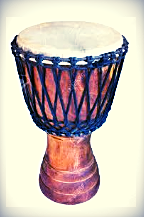
This is a djembe. This is classed as a drum. This is played by being striked. You can y=use your hand or a drum stick that is suitable for this type of drum. Nowadays drums are plastic or a tough type of skin Hyde so striking it with any force will not damage is. Whereas the djembe is slightly more delicate because of the type of drum in which it is so it needs a slightly softer touch and not as tough stick to strike it with, but you can also use your hands to create different sounds.
“Djembe or jembe, is a rope-tuned skin-covered goblet drum played with bare hands, originally from West Africa.” (Anon., 2015)
You could also play this with a beater to give it a more crisp and strong sound to it. Although it may not be recommended because the skin may be easy to rip/break.
The pitch if this instrument will be determine on the size and the tension in the string. You could have two of the same sized djembes with the same amount of string, but one might have more tension in it that the other one so you are shortening the amount of space that it has to vibrate meaning that the instrument could be higher in pitch than the one that has the same size but with slightly less tension in it.
If you think of an elastic band then the more you stretch it the higher it is in pitch, the less you stretch it and then pluck it the lower it is in pitch. This is because the vibration length is being shortened and lengthen to determine the pitch.
Chordophones-
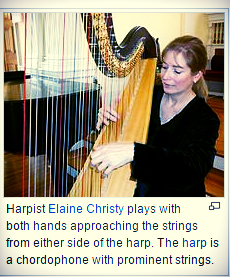
The strings on this harp will make it sound different from any other string instrument.
This is a harp. It is a string instrument. You play this with your hands. You can strum it by sliding your hands in different potions on the strings, or plucking the strings gently or more harshly to make a more distinctive sound. This is a chordophone because you play different notes of strings to create a chord. For example you can pluck the c. e and g strings and then you have a c chord major.
How a chordophone is played –
When a chordophone is played, the strings vibrate and interact with each other. There is usually something that makes the sound resonate, such as the body of a guitar or violin.
This is an acoustic guitar. It is a string instrument and it can be played by picking lucking and strummed. This is also a chordophone because you can create chords by pressing of different strings on different frets then you create chords. Strings that sound good together, harmonise and make a chord.
Also the instruments will sound different with the material it is made out of. For example the guitar and the harp are different sounds because of the way they are made. A harp has a structure with a big hole in the middle where the strings lie and they pull on the strings whereas the guitar actually has a body where there is a little whole going into a hollow piece of wood. Different types of wood will also make the guitar sound different. You can also get guitars made in a different material. I have a guitar that has a fibre glass back and it sounds a lot different from a normal originally made acoustic guitar. The wood can absorb some frequencies and the glass will also absorb some different frequencies. The harp as such doesn’t tend to have a body. By this I mean you look at a guitar it actually has a body with a space where as the harp is just a big open space with a frame to hold the strings
Also the strings will make something sound different in a string instrument. You can get nylon strings and plastic strings for an acoustic guitar. They sound different because they have different frequency levels. They have their own level of frequency. This is another reason they sound so different and are in there own category.
https://en.wikipedia.org/wiki/Guitar
Aerophones-
“A trumpet is played by being blown into. This is why it is in the category Aerophones. There are several types of trumpet. The most common is a transposing instrument. Earlier trumpets did not have valves, but modern instruments generally have either three piston valves or, more rarely, three rotary valves. The use of rotary valve trumpets is more commonly seen in European countries, particularly Germany and Austria. Each valve increases the length of tubing when engaged, thereby lowering the pitch.” (wiki, 2015)
“As with all brass instruments, sound is produced by blowing air through closed lips, producing a "buzzing" sound into the mouthpiece and starting a standing wave vibration in the air column inside the trumpet.”
Back in the day trumpets would be made out of different materials. Today’s trumpets are made with brass. With brass instruments the size of them matters to what frequency they are based around. A small trumpet will be high in pitch where as the biggest trumpet are going to be lower in pitch than the smaller one.
A harmonica is played by being placed over the mouth and blown into just like a trumpet, but the difference is the size and how they are made. As shown above the harmonica has reeds to create the sound that it does. The different size of the harmonica will also change how it sounds because of the resonance chamber that the vibrations go to which creates the different sound when blown into. It will give the instrument different chords because of the size. You may get more chords in bigger ones, you may not.
Dynamics will change with how hard you blow into the instrument. Softer, quieter and harder, louder.
“Reeds are pre-tuned to individual pitches. Tuning may involve changing a reed's length, the weight near its free end, or the stiffness near its fixed end. Longer, heavier and springier reeds produce deeper, lower sounds; shorter, lighter and stiffer reeds make higher-pitched sounds. If, as on most modern harmonicas, a reed is affixed above or below its slot rather than in the plane of the slot, it responds more easily to air flowing in the direction that initially would push it into the slot, i.e., as a closing reed. This difference in response to air direction makes it possible to include both a blow reed and a draw reed in the same air chamber and to play them separately without relying on flaps of plastic or leather (valves, wind-savers) to block the nonplaying reed.” (Anon., 2015)
Performance methods
Movement- Theremin picks up the distance your hand is away from it and create a sound. This will also alter the tone that it creates.
Tap- you can gently tap the strings or any instrument and create a loudish noise or a ge4ntle tapping sound. People will also use this technique to make a guitar sound very different than if you were to play it normally.
Strike – striking is something that you play a drum. You can use your hand/sticks or a pedal. You can also do this top other instruments. You can strike a guitar gently on the body to create a slightly different bass noise from the body of the guitar and then you can also make it sound like a more melodic drum sound.
Pluck – you do this by pulling a string and letting it go. This is different from picking. Picking is gentler and plucking is more of an outstanding noise. Plucking can be more harsh sound. Also you can do this with any string instrument. Guitars and violin.
Sliding- this is used on a guitar also. You can put your finger on a string, pick, pluck or strum the string and then move your finger in any direction and it will change the pitch of the sound that it creates. You can do this with a violin and any other string instrument. You could also do a form of this on a piano. You do this by putting your finger in a note and then slide your finger across the keys as it plays a different key of the piano and this is done by sliding your fingers up or down the piano. This can also be done on an electrical keyboard.
Picking- this is similar to plucking but it can be gentler. This is because when you pick it, it literally grabs the string ad pulls it slightly and quickly. This could be done more gentle and can be done harshly. This is the difference between plucking and picking. This is done mainly on a string instrument. Double bass also is capable of this technique. This makes it sound more interesting to the ear other than a typical noise that we are expecting it to be/sound. This can also be simulated by using a plectrum which is something you use to play the strings on a stringed instrument.
Strum – this is done to a guitar. Or again any string instrument. This is done by moving your either left or right hand across all of the strings at once. From top to bottom. You strum an instrument such as a guitar or bass guitar (which is usually played by plucking or picking making the sound sharper). You can als0o strum an electric guitar.
Slap- this is usually done on a bass guitar. This makes it sound more original to the other guitar classed instruments. You can have an electric guitar or an electric acoustic guitar. You can also have a violin and other string instruments. Even though a piano is a sting instrument. The strings are being strike which is why it isn’t really classified as a guitar instrument or played the same as guitar classified instruments. When you slap a guitar or bass guitar it makes a twangy sound which vibrates the strings in a different way to strumming, picking or plucking.
Bowing- this is simulated by using a bow. This is usually another object that you play a violin with that creates a totally different sound than the normal guitar or string instrument. You can use this by just sliding the bow across the strings or you can do a mixture of sliding and tapping the bow on the strings to again create a slightly different sound.
Brush - this is simulated by using a brush. This is normally used on a snare drum. This will create a slightly gentler sound less aggressive sound to the drum and usually quieter.
Blown – this is usually done by blowing into the instrument. For example you blow on a trumpet or any other wind instrument.
Movement- a movement instrument is something that creates sound without touching it. There is an instrument called the Theremin which imagine heap played. This is an instrument in which is played by individual movement in which she makes with any part of her body. For example if she moved her hands in a certain direction it will make a sound. It could be low or high pitched depending on where about her hand is being placed and what she has set the settings to. This is also known as computerised music because it is
CONSTRUCTION TYPES.
Pipes-
This is a trumpet. This is an instrument that has pipes. How do pipes produce sound? Well by blowing into the mouth piece of the trumpet and making vibrations with your mouth, sends vibrations and frequencies through the pipes. When it comes to trumpets and playing them, they all sound different depending on the material, the length of the pipes and the size of the trumpet itself.
The pitch of the trumpet differs because if you use the valves it shortens the length of the pipe, therefore the pitch changes because the vibrations have less space to move. Which in turn makes the pitch of the sound go higher. This is caused because you are without actually shortening the length of the pipe physically, by pushing the valves down it shortens the space of the pipe which shortens it without actually shortening the pipe. The dynamics can also change from being quiet just like any other instrument can. This will happen with how much power is put into by the mouth piece in the first place. The harder you vibrate your lips (acting like a reed) the louder the sound will more likely to be.
Reeds- A reed is a thin strip of material which vibrates to produce a sound on a musical instrument. (Anon., 2015)
A reed will create vibrations that will also create different frequencies. Once past through the chamber of a saxophone or clarinet then it will produce different frequencies of sound. This can differ from what the material of the instrument is made of. Brass or silver plated metal for example. The valves will also shorten or lengthen the chamber of the saxophone or clarinet also changing the pitch of the sound. You can also change the dynamics of the sound by how hard you vibrate the reed. This will make it either quieter or louder when being played. However much power is being forced into it will change how the instrument sounds. For example when you play a drum, when you hit it softly then it is quieter than when you hit it harder.
You can also have different reeds for say a saxophone and a clarinet. This will be the thickness, how much it vibrates and the overall size of it to fit the mouth piece. A reed also acts like our lips when we blow into a trumpet. It will vibrate for us which in turn creates vibrations to create sound.
Skins- Tambourine and a normal drum kit? These two instruments have the same technique of playing them. By this I mean they both create sound by being interacted with by a hit or sticking it.
djembe drum tambourine (Anon., n.d.)
A tambourine will make a more twangy sound. This is because the sound is going directly from the skin through the frame and straight into the atmosphere. There for the vibrations aren’t really going anywhere or bouncing off anything to create a slightly different sound. You can cannot change the pitch as an individual instrument, however you can change the pitch of it by the size of it. This will change the pitch because the vibrations are traveling less because the particles are closer together. Where as if the tambourine was to be bigger the vibrations will have a bigger space to be energised it. The particles are further away therefore the vibrations have bigger space to move, creating a lower pitched sound. Also with a tambourine once the tension on the skin is made, you can then no longer change the tension. This will also change the pitch because of how the space for the vibrations change. The smaller space the higher in pitch. This will also speed up the vibrations.
A normal drum on the other hand. You can change the dynamics y how hard or soft you hit is. This is because when you hit it hard the sound will naturally be louder anyway because there is more energy being put into it. The pitch will be changed by two things. You can change the pitch whenever by the tension being loosened or by being tightened. The pitch will also change because of the size of the drum. The bigger the lower the pitch, the smaller the higher the pitch. Dynamics will change by how hard or soft you hit it. You can also change the slight sound it makes by playing it in different parts of the skin surface. You can also place a hand on the skin and make the tone sound duller. ws
ADSR-
Attack. This is how long it take for the sound to get to its highest sound capability.
D- Decay. This is how long it stays at that not for on its own
S- Sustain. This is where the note will stay at that level while being made to. For example if you play a note on a keyboard then hold down the key, the tone stays playing for however long you keep your finger down on that key.
R- Release this is where once you let go of the key in this case, this is how long it will take till the tone fades out and stops playing completely.
Timbre –
This is where it describes the characteristics of the sound. For example using different pitches and softness of the sound or harshness then it can make you feel a certain way. When I think of this I think that the squeal of strings sometimes when being played on the violin. You can play it a certain way with the bow that creates a really harsh should that hurts your ears but in some cases when the sound is placed into a film in a horror genre maybe, it can make everything sound scarier.
You can also experience different sounds with picking on the guitar. If picking the strings then it can make it sound nice and calm and pretty and soft. Some people will describe timbre in a form of colour. Sometimes people will say the characteristics of this sounds blue and sad. Because this is how the sound is making that person feel. This the same by how loud something is. If a harp is being played it is soothing and calm, where as a big band on the drum can make a person jump. The sound is scary and sudden. The harm is slow and the sound is soft.
Amplitude-
Amplitude is the pressure of the sound. Positive or negative. It also determines the energy in a wave. The higher the energy in the wave the bigger the amplitude. The lower energy in the wave the smaller the amplitude.
Bibliography
Anon., 2015. wiki. [Online] Available at: https://en.wikipedia.org/wiki/Reed_(mouthpiece) [Accessed 2015 12 04].
Anon., 2015. wikipedia. [Online] Available at: https://en.wikipedia.org/wiki/Djembe
Anon., 2015. wikipedia. [Online] Available at: https://en.wikipedia.org/wiki/Trumpet
Anon., 2015. wikipedia. [Online] Available at: https://en.wikipedia.org/wiki/Harmonica
Anon., n.d. google images. [Online] Available at: https://www.google.co.uk/search?q=skin+instruments&safe=strict&biw=1280&bih=929&tbm=isch&tbo=u&source=univ&sa=X&ved=0ahUKEwiXitzdj8LJAhXIUhQKHVUhBmkQsAQIHg [Accessed 04 12 2015].
wiikiipedia, 2015. wikipedia. [Online] Available at: https://en.wikipedia.org/wiki/Musical_instrument_classification
wiki, 2015. [Online] Available at: https://en.wikipedia.org/wiki/Bell_plate



Here are some images from the assingment. Only a few of several.


Comments